Monday, January 24, 2011
No Check, Mate
In the wake of Matt White’s sudden dismissal as Garmin-Cervelo’s director sportif, there’s been a lot of debate surrounding the “real reason” for the firing. Was it, as team chief Jonathan Vaughters maintains, because White sent former team rider Trent Lowe to highly suspect doctor Luis del Moral for blood tests in 2009? Or was it really because of White’s rumored links to the new Australian GreenEDGE effort and its alleged underhanded recruitment efforts?
I have no idea. What I do know is that whether it was because of del Moral, GreenEDGE, or both, firing White was the right move. So was sticking with del Moral as the stated cause.
Vaughters and White agree that sending Lowe to del Moral’s Valencia clinic for blood testing was a terrible idea. Both men have said as much, and surely recognize that even bog-standard blood testing, when performed by a man of del Moral’s reputation, can appear as damning as a used syringe in the hyper-sensitized world of professional cycling. And since the appearance of impropriety and actual impropriety are almost equally damaging, both men would recognize – now, at least – that a director should no more send his riders to del Moral for a blood test than send to Eufemiano Fuentes for a pelvic exam.
But while del Moral’s reputation adds some spice and urgency to the story, the fact that it was Dr. del Moral to whom White referred Lowe is immaterial. Garmin-Cervelo has a strict policy against riders going to outside physicians without approval – for just this sort of reason – and by sending Lowe to del Moral, White violated that policy. [Vaughters, of course, has hinted of some misgivings about his time at U.S. Postal, where del Moral was the team physician, which may have heightened his sensitivity in this case. But in theory, that doesn’t matter.] By invoking the team’s zero-tolerance rule on a high-profile, longtime staff member, Vaughters siezed a chance to show that the team has the courage of its convictions, a quality that the sport sorely needs. So if the del Moral referral is indeed the sole cause for White’s dismissal, it’s more than enough.
If, on the other hand, GreenEDGE connections did factor into White’s firing, then that's also a perfectly justifiable case for termination, even with no other offenses in play. If Vaughters discovered – beyond the public rumor and speculation – that White’s efforts in the professional cycling world were not 100 percent aligned behind Garmin-Cervelo’s interests, or that they were, in fact, working in direct opposition to those interests, then firing is a reasonable response. Just ask Bjarne Riis about the problems that come with team staff recruiting next year’s team while working for yours. “Whitey” has always come across as a decent guy, but regardless of personality, history, or promises, anyone in a situation where they’re directing one pro team while building another is a fox in the henhouse. He might be a fox you know pretty well, but he’s still a fox.
So, individually, each potential cause for dismissal could stand on its own. But if White’s firing were due to both the del Moral and GreenEDGE issues, why wouldn’t Vaughters say so? And if he were picking one reason or the other to take to the media, why go with the seedier del Moral visit rather than the relatively sterile GreenEDGE conflict of interest? Setting aside, for a moment, Trent Lowe’s questionable threat to take the del Moral visit public, I think there are a few compelling reasons to stick with the del Moral explanation over GreenEDGE, and over citing both causes.
First, the idea that GreenEDGE was “poaching” riders is still largely in the speculation phase, at least in the media. Those allegations – of inappropriate negotiations, incentivizing UCI points – have already been the source of some public sniping between GreenEDGE, Sky, and Garmin. So while citing both del Moral and GreenEDGE as reasons for dismissal might seem to bolster Vaughters’s case, he already had one undeniably actionable cause in del Moral. By relying on that, Vaughters avoids the appearance of acting on GreenEDGE rumors or, alternatively, avoids having to publicly accuse White of engaging in nefarious activity on GreenEDGE’s behalf. So, by letting the del Moral issue do the lifting, he avoids fanning the GreenEDGE flames. As a bonus, he doesn't come out appearing as if he's piling on excuses just to prop up a flimsy one.
Finally, if GreenEDGE factored into White’s dismissal, going public with the del Moral cause alone is more advantageous for Garmin-Cervelo than publicly tying the firing to GreenEDGE. By only citing the del Moral issue, Vaughters has efficiently accomplished all he needs to. He's (1) cut the heart out of Lowe’s blackmail threat, (2) rid himself of the Cycling Australia/GreenEDGE conflict of interest, and (3) saddled CA/GreenEDGE with a newly-hired director who is now on-record as being comfortable sending riders to a “doping doctor” who he knows from his time at U.S. Postal. Essentially, White has done the damage to his reputation under Garmin-Cervelo, but CA/GreenEDGE will bear any resulting stigma, right as they’re trying to craft their public image. And by not citing GreenEDGE in ousting White, Vaughters avoids the appearance of pettiness. That's pretty good revenge for any shady recruiting that may have gone on, no?
Again, I have no information on White’s firing other than what you all have read as well. I certainly don’t have anything to indicate that Vaughters thought out his actions in the semi-vindictive way I outlined above. But that’s how it works out. Genius, intentional or not.
Broomwagon
- For his part, Trent Lowe comes out looking fairly sleazy for threatening to go public with the year-ago del Moral trip in order to get paid for December 2010 (at which point he had not ridden a race for Garmin in eight months and was already under contract to Pegasus). It's a pretty shortsighted strategy, since to have the desired threatening PR effect, Lowe would have to play up the insidious implications of visiting del Moral, with himself at the center. In other words, to damage Garmin's reputation, he'd need to damage his own reputation even more. That's an easy bluff to call, but Vaughters went one better by beating Lowe to the punch, pulling back the covers himself, outing White and Lowe’s association with the doctor, removing both men from his payroll, and coming out smelling like a rose. That has to sting. While it doesn’t justify Lowe’s behavior, I do empathize somewhat with his situation – with his new team collapsed, no pay for December, and a buyers market for sickly, underperforming climbing specialists, he’s not exactly looking at a happy new year.
- This week in Twitter fights:
1. Cedric Vasseur versus Jonathan Vaughters on teams representation.
2. Radio Shack’s Johan Bruyneel versus Cofidis’s Eric Boyer on team radios. You stay classy, Johan! - Sorry about that post title. Really.
Labels: Business, Doping, international, Teams


Thursday, January 20, 2011
If/Then
If you’re some hack with a website about professional cycling, then you’re kind of obligated to offer up some commentary about the highly anticipated Sports Illustrated Armstrong article by Selena Roberts and David Epstein. So here are my quick thoughts, bearing in mind that much of the article's content was previously known, and that much of the remaining intrigue comes from what might have been left out.
- If the SI description of Don Catlin’s labwork and his interactions with the U.S. Olympic Committee are accurate, then the actions of Drs. Catlin, Brent Kay, and Arnie Baker indicate that Michele Ferrari might be the most trustworthy, sane medical professional involved in this whole extended mess. With Ferrari, at least you know what you’re getting, and that it works.
- If the (previously known) Motorola EPO story is true, then Paul Sherwin looks like even more of a sycophantic ass for his Armstrong pandering, since he was the team’s press officer.
- If Armstrong did gain access to HemAssist while the drug was in clinical trials, to borrow a phrase from Vice President Joe Biden, "this is a big f***ing deal.” Frankly, it's irrelevant that Lance Armstrong might have gotten ahold of it -- it’s a big problem regardless of who's involved. People have been bleating for months about why FDA would be involved in this sort of investigation. This is why. Ensuring the safety and efficacy of drugs, and the safety and legitimacy of the clinical trials used to test them, are damn close to the core of FDA’s regulatory mission. If experimental drugs are escaping from trials into the broader population, that is a very, very significant issue for them. So if they have to rile up a bunch of pencil-necked bike geeks to get to the heart of the matter, I’m guessing that suits them just fine. This is bigger than sports. For more detail on the HemAssist issue, consult Joe Lindsey.
- If HemAssist’s class of drugs is as risky as some of the information in Lindsey’s post indicates, then “the shit that will kill them” might take on a whole different meaning.
- If you were wondering if HemAssist, however acquired, might be OK under cycling’s rules because it’s not on the list of banned substances, then you need to read section M1 of the WADA code, Enhancement of Oxygen Transfer.
- If SI was willing to print both the existing and new Landis allegations (i.e., the St. Moritz airport story), then I'd think the authors must have at least one other source confirming the validity of those allegations. We’ve been through a few rounds of the “Landis is a liar” defense already, and it’s been pretty effective, probably with good reason. I’m guessing a publication like SI, while it’s no scientific journal, vetted Landis’s accusations pretty thoroughly before exposing itself to that sort of risk, especially given his history.
- If people are surprised that private airports are a good way to move contraband, then they’ve clearly never seen an episode of the A-Team.
- If Yaroslav Popyvych (whose house was raided, yielding drugs and evidence of continued Ferrari ties according to SI) wants to look innocent, he should get the hell off of Tenerife before issuing his denial.
- If, as has been rumored, there is damning, unpublished material regarding the misuse of Livestrong foundation funds, then that is the only thing that will ultimately shift broader public opinion. Until then, the rest of this really only matters to cycling fans. Don’t kid yourselves.
- If Livestrong does become the core of the issue, then I’m guessing you’ll see a lot more of the IRS than FDA. Tax evasion is a pretty useful charge.
- If, as rumored, there is a “strippers/hookers and blow” storyline that was also left out, then I don’t really care too much. That material would grab non-cycling eyeballs, sure, but it would also just distract further from the heart of the matter and give the true believers one more “this is irrelevant, what's the point of this?” talking point. Besides, I’ve been to college, and I’ve been around cyclists for most of my life. I’ve seen strippers and blow already.
- If Roberts and Epstein do indeed have the much-rumored additional information that was allegedly removed from their article, then I hope they pursue other outlets. For instance, any misdeeds regarding Livestrong might be a better fit for SI’s current affairs-oriented Time-Warner stablemate, Time magazine. Or, if Time-Warner lacks the stomach for it altogether, I’d suggest Der Spiegel, the Economist, or any other credible current affairs publication. Many have suggested the web as an outlet, but, like it or not, for some things you sort of need a bedrock publication to add credibility to the information. Otherwise it’ll just be attacked with the “well you can put anything on those websites” argument. But for godssake, just stay away from LeMonde and L’Equipe (or any other French publication). We know that, counter to the U.S. drumbeat of the early 2000s, they’re very credible publications. But there’s no sense in bogging down the information by inviting people to stoke up the ridiculous “French conspiracy” fires again.
- If new information and corroborations continue to come forth, then at some point, Greg Lemond’s settlement-induced gag order will become moot, no? And at some point, somewhere in the great Midwest, I’m betting he and Betsy Andreau will meet for a cocktail.
- If things go severely downhill for Armstrong, then I’m guessing there are only two options: stone-faced denial until the very end of his life, or burn-baby-burn and everyone goes down with him. Middle ground has never been his strong suit.
- If you’d like some real analysis of the article, then you should consult Charles Pelkey.
- Finally, if the pace of this whole investigation picks up, then Geox may get that Tour de France start after all.
Labels: Business, Doping, international
Monday, January 17, 2011
When a National Team is Not a National Team
With the Pegasus ProTour effort not even cold in the grave, the next great Australian ProTour bid has already shot through the birth canal and now lies screaming on the scale, waiting to be weighed. Circle of life, I suppose. Going by the name GreenEDGE (which sounds suspiciously like a Billy Mays cleaning product), the new effort is headed, as predicted, by former Australian track cycling boss Shayne Bannan. And as predicted, it’s already ruffling feathers. Before the team even held its first presser, rumors surfaced that its management was engaging in rider-poaching shenanigans, offering dodgy “pre-contracts” and potentially troublesome UCI-point incentives to Australian riders on its wish list.
I’m not usually one to comment on early rumors, but Jonathan Vaughters, whose young Australian talents Cam Meyer and Jack Bobridge are reportedly on the shopping list, has already responded publicly to the reports. That would be an uncommonly brash public step for the level-headed Vaughters if he didn’t have good reason to believe that they’re true, particularly since everyone in this potential dispute speaks the same language and reads the same media. Vinokourov can probably spout whatever he wants to the Kazakh media in relative safety, but when Vaughters comments on cyclingnews.com, he has to know Bannan’s going to see it. Based on Vaughters taking that step, I have to believe there’s some credence to the story. For his part, here’s Bannan’s response to the poaching allegations.
And so, to the matters at hand…
Does any of this sound familiar: New zero-to-ProTour effort wrapped in a national flag? English-speaking? Headed by the nation’s very successful national track coach? Backed by a national federation and a reliable in-country sponsor? Disregard for the rules and/or courtesies of professional road cycling business operations? Eyeing Vaughters’s goodies?
The GreenEDGE model appears, of course, to be Team Sky all over again. That’s not a groundbreaking thought; plenty of others have said as much, said it better, and said it earlier. What I’m wondering about is to what degree the national track team background shared by Sky’s David Brailsford and GreenEDGE’s Bannan share is the root of the friction both seem to cause in the professional road scene. Simply put, have Brailsford and Bannan (hereafter B+B) tried to build professional road teams the same way they would a national track team? Let’s look at why that might not be the best way to go.
First, there’s the issue of how you approach riders. B+B come from managing federation track programs, where the most relevant information for recruitment isn’t found in a rider’s professional contract, but in his passport. Are they a confirmed Brit or Aussie? Great! Pick up the phone and give them a call! If they want to come ride for god and country, we’ll work out the schedule with their professional team somehow, right? In building their road teams, B+B seem content to continue following that methodology. Confirm the passport and dial, never mind that it’s January, or that riders are tied to multi-year contracts. You’re from the right country – we’ll work it out!
As both men are finding, the professional road scene doesn’t work like that. Though your team may be trying to become the defacto “national” ProTour team, professional road cycling is commercial, not national. Sure, for the rider, riding for the professional “home team” might have patriotic appeal, a fringe benefit like more paid trips home, appealing linguistic familiarity, or better compatibility with management. And for the team, home riders obviously have benefits from the fan interest and sponsorship perspectives. But beyond those warm feelings and on all that white paper printed with rules and contracts, nationality is fairly irrelevant in the ProTour system. (Until you get popped for doping – different story.) Shared nationality between teams and prospective riders affords no special rights and privileges beyond how employing native vs. foreign riders plays out in the applicable labor laws. In leaving the national/federation format and joining the commercial/professional one, B+B need to give up the idea that they have a constitutional right to chat up the top riders from their country, or risk being found in violation of UCI rules. Simply put, native riders like those you coached on the track are no longer “your boys” who you borrow from their road teams from time to time – they’re your competition’s employees. The relationship has changed - acknowledge it.
Yes, for professional teams that rely on a national identity, it can be a real downer when much of the best native talent is contractually tied down. And not having unrestricted access to the whole national talent pool must come as a shock to B+B after their success at honing their nations’ track programs. But if they could look past the horizon a bit, they’d see the upside: that it works both ways. While GreenEDGE might not be able to call home everyone’s Aussies as they please, neither will, say, Rabobank be able to come in and arbitrarily recall any Dutchmen GreenEDGE might employ. It's not a great situation when you're trying to burst out of the starting gate, but it feels a lot better a few years down the road.
On top of those issues of recruitment rules and manners, there’s the relative inexperience in recruiting at all. National track managers do occasionally need to woo riders – for instance, in trying to lure road riders like Wiggins, Cavendish, or O’Grady back to the boards for the Olympics or Commonwealth Games. But much of the time, coaches in big track cycling nations are in the very opposite, very enviable position of being team “selectors” rather than recruiters. Without a vibrant professional scene, the national team system is the only chance for many dedicated trackies to make a relative living at the sport. So for B+B, picking up riders to fill out a team has long been a buyer’s market. Now, faced with the greater competition and elaborate courtship dances of the professional road scene, and forced into the role of suitor of the top talent rather than the suited, they seem unsure of the proper way to make their advances. What’s worse, they don’t seem to care what the right way is.
That’s all just a theory, of course, but one thing is for sure. GreenEDGE’s alleged recruitment tactics might be distasteful, they may even be against the rules, but they can hardly be a surprise. The last 10 years have effectively seen “the rise of the state” in professional cycling. With federation-backed squads proliferating, team managers have to expect that Katusha will come for their Russians, Sky for their Brits, and Astana for any Kazakhs they might have kicking around. And on and on. Cycling Australia's ProTour plans have been known for some time, so if other teams' management hadn’t spoken to their Australians about this eventuality yet, they've been caught with their pants down. You could argue that shouldn't be the case, that expecting people to play by the rules shouldn't mean you're caught out. Unfortunately, in cycling, that's just not realistic.
Other GreenEDGE Notes
- The idea of paying prospective riders for UCI points they accumulate with their 2011 teams is potentially much more troublesome than trying to recruit them outside the bounds of the UCI’s signing period. The motivation to offer such a deal is clear – when GreenEDGE submits its license application, it wants to ensure it has enough collective UCI points to make it a sho-in for the first division (a la Leopard-Trek), and it’s willing to pay for that assurance. But incentivizing riders to pursue UCI points for their current teams puts those riders at the heart of a severe conflict of interest.
As we know, winning a professional bike race is about a bunch of guys sacrificing their strength and chances so that one team member can win, or try to at least try to win. If each team member is chasing their own placings and the points that go with them, the team strategy goes all to hell. In the late 1990s, or maybe it was the early 2000s, Cofidis had virtually no cohesive team strategy and the underachievement to match. Why? A significant part of their riders’ pay structure was tied to UCI points, so when things really went down on the road, it was every man for himself. But at least Cofidis was responsible for putting itself in that position. If allegations of GreenEDGE’s gladly-pay-you-Tuesday-for-a-UCI-point-today offer are true, GreenEDGE is effectively forcing Cofidis’s terrible management strategy onto other teams.
Will such an offer have any real effect on rider behavior? I wonder. I’m guessing most riders know that, in professional cycling, what goes around comes around. In what could be a 10 or 14 year career, you don’t want to become known as the guy who screws over your current team to get in the good graces of the next. A few rounds of that, and no team wants to be the next screw-ee. Further, I’d imagine that as soon as a team got the feeling a rider was engaging in that sort of behavior, the rider would be benched, thus eliminating their ability to gather any points at all. In the long-run, it’s better for riders to demonstrate their value to all prospective teams through their work, UCI points be damned, than to blow their credibility trying to collect 14th place points for a single, possibly pie-in-the-sky outfit. Also, it should be pretty easy to spot the type of rider who might be engaged in this particular effort -- they're the ones who have pet kangaroos, drink a lot of Fosters, eat deep fried onions, and carry enormous hunting knives at all times. Or so I've been led to believe. Anyway, I don’t expect to see Mark Renshaw trying to shake Mark Cavendish at 200 meters and cutting for the line anytime soon. (Just a hypothetical example – Renshaw’s under contract through 2012, I believe. Not that that matters.) - GreenEDGE was also allegedly in pursuit of Garmin DS Matt White, but he’s since signed on to take over Neil Stephens’s position as the Australian national team road coach. He’ll be doing that in addition to his Garmin duties, so I suppose the GreenEDGE angle there is put to rest. Stephens, however, is leaving the national position to…surprise…go sign riders and be a director for GreenEDGE.
- GreenEDGE reportedly has the backing of Australian cycling’s sugardaddy, Gerry Ryan, head of the Jayco camper company. I, for one, am hoping that Jayco becomes the title sponsor. Then, in an homage to the RV industry, the jerseys can feature a band of wood-grain paneling and the team bus can feature moldy carpet and some rotting floorboards around the shower.
Broomwagon
- Not to be bossy, but start reading this blog right now. Particularly the post-Peter Post post.
- How envious is Leopard-Trek that I capitalized the “EDGE” in GreenEDGE? Know why I did it? Because they didn't try to make me. It’s worth noting that the infamous list of media demands regarding presentation and pronunciation of the Leopard team name was reportedly sent out by Trek, not by the team itself. I'm guessing team manager Bryan Nygaard has enough experience as a press officer for Riis and Sky to know that dictating style and usage to the media is an uphill battle, and that it’s better to stay on their good side by not presuming to order them around. Trek Bicycles, on the other hand, has clearly come to think of the cycling media as an arm of their advertising department. More disturbing than the misconception itself is the likely chain of events that’s led them to believe that.
- Yesterday’s cyclocross World Cup from Pontchateau, France finally gave those of us in the Mid-Atlantic United States an international course that looked a little more familiar, with green grass and a blue groove replacing the deep mud and snow of the low countries. I reveled in watching those sloppy Christmas week races, but it was nice to see a fast, tactical race after the weeks of grinding. One thing’s for sure, if yesterday’s winner Kevin Pauwels (Fidea) comes to the line in a small group at the world championships in Sankt Wendel, you can’t count him out for rainbow bands. Nys and Albert have been no match for his finishing kick, though an in-form Zdenek Stybar (Fidea) would have a better shot.
- No time to get into the whole race radio debate at the moment, but I do wish all of the managers and riders would stop bleating about the 18-2 vote by the teams to keep the radios. I understand what that vote demonstrates, but the fact is, the sport isn’t a direct democracy run by the riders or the teams. Obviously, rider and team input should always factor into the sport’s decisions – both because it is the riders who ultimately place their lives on the line, and because riders and teams have been historically underrepresented in decision-making. But what would cycling in particular and pro sports in general look like if the participants made all the rules? My bet: they'd be both less safe and less marketable.
Labels: Business, international, Media, Teams
Wednesday, January 12, 2011
Predictive Text
Sometime in the first two months of this season, Leopard-Trek will score its first victory on the road. When it happens, at least one headline will read, “Leopard Pounces.”
Sometime in the run-up to the Tour de France, in May or maybe even June, Leopard-Trek will sign a title sponsor, necessitating a hasty revision of all the team’s kit and materials. When it happens, at least one headline will read, “Leopard Changes Its Spots.”
Those last minute pre-Tour sponsor pickups – and the horrible headline puns that come with them – are becoming a sort of late-spring tradition. Though it would be easier on everyone’s nerves if sponsors signed on for the whole year, the late arrivals obviously aren’t a bad thing. More sponsors are better than less, and the latecomers infuse the post-Classics period with a little hint of pre-season freshness as a whole new round of kit designs and bus stickers and god-knows-what-else are unveiled. Slipstream’s done it. High Road’s done it. And you can bet your ass Leopard will do it, too.
What I’m wondering now is, when that sponsor emerges, how much will the nascent Leopard-Trek be forced to change those headline-heralded spots? If the new sponsor is a fashion-forward undertaker or Mercedes-Benz, the current look could be carried forward relatively intact. But if, say, Krylon or Lego cough up some cash, a somewhat more obvious change could be in order.
Thanks to James Huang, we know the team's present look was put together in short order once it was clear there would be no title sponsor by the time the onrushing season forced the team to go public with whatever it had. So in that sense, Leopard management may not be terribly wedded to the resulting black-blue-white spray job. But the Leopard powers that be, including its manager and noted PR man Brian Nygaard, seem to be an image-conscious (and image-controlling) bunch, so I have to wonder if sponsor-directed change might be a bit of a bitter pill if and when it comes. As it stands, the team has a very northern European composition, look, and feel, and remaking it in the visual image of something like Kelme at a sponsor’s behest might not sit too well. Obviously though, money talks, and I have every confidence that a cool $5 million would be enough to get Kim Anderson driving the team car in a lavender cordoba.
A look at the relevant case studies, the teams currently known as Garmin-Cervelo and HTC, could give hints at the approaches Leopard might take when the check clears. When Jonathan Vaughters signed Garmin to replace the name of his Slipstream ownership/management company in the team's title spot, the fashion-aware manager nevertheless retained much of Slipstream’s orange-'n-argyle branding on kits and ancillaries. With this season’s Garmin-Cervelo merger, the need to accommodate Cervelo’s established branding crowded the argyle a bit more, but it’s still there.
Bob Stapleton’s High Road formation has proved a bit more malleable. After T-Mobile’s pullout (but still temporarily running on T-Mobile money), the team debuted in black and white livery stamped with High Road, the name of Stapleton’s ownership entity. It was a blank-slate, your-name-here approach that allowed the team to easily adapt when Stapleton landed Columbia Sportswear as a headliner during the pre-Tour bargain sale. The team went first to blue jersies, retaining its black shorts, then shifted towards its current yellow-black-white look that’s survived through the addition and ascent of HTC and Columbia’s departure. The High Road logo, though, has remained, not across the chest, granted, but always present.
Though both teams have thankfully found steady corporate backers, it’s worth noting that both retained either logos or subtle branding elements that keep their management companies – traditionally anonymous and anonymously-named entities – very much in the public eye. The same could be said of Riis Cycling, made evident on this year’s Saxo Bank kit by the infamous trouser bird. I expect that the Leopard name and some aspect of its branding, like those of High Road and Slipstream, will remain prominent as the team moves forward, regardless of any evolving sponsor situation. Why? It’s good business.
The increasingly visible role of management companies in cycling provides the entities we think of as “teams” with a consistent business identity in an unpredictable sponsorship environment. It makes it easier for team ownership to present potential sponsors with a unified story of value that the company has accumulated under an array of different sponsors, different sports directors, and different riders. The company name – Slipstream, High Road, Riis, Leopard – unites all of the organization's history, reputation, structure, and operating procedures into a convenient, easy-to-understand package. The corporate approach also helps avoid the pitfalls of gathering sponsors through cults of personality, Giancarlo Ferretti-style. In making themselves high-visibility cycling companies, High Road is not just selling Bob Stapleton to sponsors, and Slipstream is not just selling Jon Vaughters (though those figureheads’ skills undoubtedly drive their companies’ successes). Thus, when and if something changes regarding the individual's involvement, there’s a better chance that the whole thing won’t simply crumble in their absence. For potential sponsors, particularly those educated in cycling's long string of team failures, any reassurance is valuable.
Broomwagon
- What’s the inverse of the pre-Tour sponsor infusion? Why, the post Tour dope scandal sponsor exodus, of course. Easy come, easy go.
- Is Leopard-Trek a greatest hits album of “new team” initiatives? The staff and riders of CSC/Saxo Bank. The videos of Cervelo Test Team. The on-bike fashion sensibility and media strategy of Sky. The natty team presentation stylings of Garmin. That’s all well and good – now show me the development team or the women’s team.
- Some folks have a problem with Kim Anderson (and his extensive and arguably landmark doping history) being in team management for Leopard. I don’t. Because if I were a Leopard rider looking for doping guidance, Kim Anderson is about the last person I’d ask for advice. He clearly wasn't very good at it. What I do find interesting about the minor Anderson uproar is that he’s been working for Riis for years with little fuss. Guess working under a guy nicknamed “Mr. 60 Percent” and who confessed to winning the Tour doped up provides a pretty good diversion.
- Twitter sponsors Radio Shack. So many potential jokes my head hurts. I'm content to chuckle to myself rather than make you all suffer, but in keeping with the initial paragraphs of this post, I will predict that “Failwhale” will appear in at least one Shack-related article this season, as will the phrase “character-limited.”
Labels: Business
Saturday, July 03, 2010
Bank Heist
“My daddy was a bank robber,
But he never hurt nobody.
He just loved to live that way,
And he loved to steal your money.”
- The Clash
Daddy Was a Bank Robber
For the second time in two years, Bjarne Riis’ team is at the business end of a holdup, and this time it’s an inside job. As has been widely reported and confirmed by Riis himself, longtime Riis DS Kim Anderson is taking Andy and Frank Schleck and constructing a Luxembourg-based team around them for 2011. With no sponsor lined up for next year and the defacto rider-release deadline of the Tour de France upon us, Riis seems resigned to shrugging his shoulders and emptying the drawers.
In 2009, when the startup Cervelo Test Team burst through the front door of Riis Cycling and lifted, among other things, reining Tour de France champion Carlos Sastre, DS Scott Sunderland, and bike sponsor Cervelo, Riis could comfort himself with the fact that, while they grabbed a lot of loot from behind the counter, they didn’t get into the vault. And behind that sturdy door, Riis still had the core of his squad safely intact. When Cervelo and CSC departed, Andy and Frank Schleck, Fabian Cancellara, Jacob Fuglsang, and Jens Voigt were more than enough to bring on Specialized and Saxo Bank to foot the bills.
This time, though, Anderson came in with the combination to the safe tucked in his back pocket, and now the door is swinging wide open and the shelves are quickly being picked clean. Yes, only the Schlecks have been linked so far. Fabian Cancellara has remained notably silent, and Jacob Fuglsang and Matti Breschel have stated that they’d like to stay with Riis, but also that they’d really like to get paid next year. Obviously, losing his two biggest grand tour names when he’s headed into the Tour de France with no sponsor locked down for next year puts Riis in a hell of a difficult position.
I’ve heard talk that the Schleck’s departure would give Riis the room – both funding-wise and team leadership-wise – to pursue someone like an Alberto Contador. I don’t think that’s quite the right way of looking at it, though I admire the optimism. I think that the truth is that Riis now finds himself in a Catch-22, where he doesn’t have the funding to promise a GC star, and he doesn’t have a GC star to promise the funders. It could be worked out – more difficult circumstances have certainly been resolved – but someone would have to take a pretty big leap of faith, and in a tight sponsorship climate, I don’t see riders or sponsors being terribly anxious to risk next year’s profits just to help Bjarne out of a jam. In effect, with no sponsor and no Schlecks, Riis is stuck with two variables, when he desperately needs a constant to solve the equation.
Ah, but what of Cancellara, you say? Motorized bike or not, he’s been one of the stories of the last half-decade. A multi-classic winner, the dominant TT rider of his generation, versatile, handsome and intelligent, and, as of today, current yellow jersey wearer in the Tour de France – he’s a sponsor’s dream. If Tom Boonen, with a supporting cast like Stijn Devolder and Wouter Weylandt, can justify the existence of Quick Step, why shouldn’t Cancellara, backed by Breschel, Fuglsang, and the rest be able to drum up some funding for Riis?
There’s a couple of answers to that question. The first one is easy – because for the last six months, Riis has offered sponsors those names plus the Schlecks, and the sponsors haven’t bitten. I doubt the absence of the Schlecks will increase sponsor interest. The second answer to why Cancellara probably isn’t enough to shoulder a team as Boonen does? A Swiss star winning Belgian races for a Danish team, good as he may be, just doesn’t attract the national pride funding that a Belgian superstar riding the big Belgian races for a Belgian team does.
There are, of course, fairly big teams built on less – AG2r and Lampre spring to mind. But those teams – like the aforementioned Quick Step – also campaign heavily on their national calendars. They’re active national teams at home that also happen to operate at the ProTour level, and as a result they’re appealing to national companies with sponsorship dollars. While it’s often one of Riis’s teams’ greatest assets, when it comes to the sponsor hunt, the internationalism of his squads can also hurt them. At the same time his squads belong to many countries, they also belong to none. Sure, Riis’s squads have always been committed to contesting Danish races, but compared to the Italian calendar or the French Cup series, there’s not a lot there – race wise or exposure wise – to base a sponsorship on. So to bankroll his top-flight, United Nations of a team, Riis needs a sponsor with international interests and deep pockets, and a lot of those companies aren’t feeling too flush right now. Or are feeling like they shouldn’t be looking too flush right now. Reality or perception, the result is the same.
Why do Riis’ squads seem to invite such raids? If you follow the broken window theory that floats around law enforcement, you might look for the broken window or the cracked tailpipe, that little tell-tale sign to would-be thieves that indicates a likely target. From where I sit on the outside, I don’t see that broken pane in Riis’ squads – his stars have, with a couple exceptions, almost always been PR dreams come true, and the team’s image is one of camaraderie, teamwork, and mutual admiration. There’s been precious little whining from riders about management, and little public scolding of riders by management. The most vocal rider gripe about the organization has been Matti Breschel’s exasperation at the inability to get a working bike at the Tour of Flanders.
What goes on behind closed doors, or what gets whispered in the hallways of team hotels, I have no idea, but to me, it seems that Riis’ teams are ripe for this sort of thing for a nearly opposite reason – everything works pretty well. The reason it works well is the people, and when people are successful, they tend to have options. Riis has capable and ambitious riders and staff, so it’s natural that from time to time they have big ideas of their own, and they pursue them. His riders, in turn, have been instilled with a team-player mentality, which makes them attractive targets for acquisition, as does the fact that Riis’ boys never seem to light up the doping lamp (no, not even Basso). They’re rarely trouble makers – not fight pickers or dirty sprinters or party boys. And, of course, they’re talented, and talent is ultimately the money in the bank or professional cycling. So when that bank gets robbed from time to time, it’s no surprise. Hell, it may even be flattering, though I’m not sure Riis sees it that way at the moment.
Broomwagon
- Wait a minute, what the hell was that? The Tour de France started today, and the Service Course is talking about last week’s Saxo Bank/Schleck thing? Indeed I am. What can I say, it was a busy week, and though I started this post earlier in the week, I didn’t quite get it done for Friday. And yes, that’s partly because I got to be one of the cool kids and go to the opening of the Rapha Cycle Club in New York on Thursday night. (I’m just kidding – I will never be one of the cool kids. But I did go to the opening, and it's a nice little place. If I lived in the NYC vicinity, I’d definitely stop by to have an espresso and check out a Tour stage with like-minded people. I’d probably also put some more fingerprints on their H van, for that matter. If you're apprehensive about going due to whatever you believe Rapha to be, don’t be afraid – you don’t turn sepia-toned when you walk in, and nobody makes you write essays about suffering. I checked.)
- When deciding to further fragment the former CSC, current Saxo Bank, doesn’t anyone think of poor Phil Ligget? The guy had enough trouble keeping Cervelo and Saxo Bank straight after the split – going so far as to check in with Cervelo DS Alex Sans Vega on the condition of the injuried Jens Voigt (Saxo Bank) in a live, on air interview during last years’ Tour. If Riis pulls it together and there are three branches to the former-CSC family tree next year, Ligget’s head may finally explode.
- I’m happy that the Tour is finally underway, but longtime readers will know I have trouble mustering much to say about prologues. In all but the most egregious cases, the gains achieved are superficial and the losses trivial, and while prologue results might often correlate pretty well with final podiums, I still don’t feel that one has a whole lot to do with the other. I guess it's the thousands of miles and two mountain ranges in between the two, but whatever, that's just me. The next few days, though? I’ll be loving it, and with pieces of Paris-Brussels, Liege-Bastogne-Liege, and Paris-Roubaix scattered throughout the route, I’m betting Cancellara will be loving it, too. There really couldn’t be better terrain for him to potentially win a stage in yellow.
- You know who else will be loving this Tour? SRAM. For the (relatively) new player on the block, there’s no denying those guys have put their money in all the right places.
- As for all this Wall Street Journal article brouhaha, somebody better be working on a good conspiracy video or article about how WSJ is owned by Rupert Murdoch, who also owns Sky Broadcasting, which bankrolls the Sky team of Bradley Wiggins, and therefore it’s obvious that Murdoch is paying Landis to spout this stuff and using his paper to lend credibility to it, all with the intent of bringing down Armstrong and aiding Wiggins’ Tour chances. Because if nobody’s on that yet, the Armstrong army is really falling down on the job.
Labels: Business, international, Tour 2010, Tour de France
Thursday, March 11, 2010
Almost as Good as Homemade
 Courtesy RCS
With the Montepaschi Strade Bianche, held last weekend over the spring hills of Tuscany, Italian organizer RCS has managed to pull off an almost unthinkable feat – they’ve managed to create an instant classic. In a sport that places a premium on history and longevity – a sport where, after 40+ years, the Amstel Gold Race still struggles to be taken as seriously as its older siblings – the Montepaschi is inching its way towards premier status after only four short years of professional existence.
No, victory in the Montepaschi won’t soon be held in the same esteem as a win in the Ronde van Vlaanderen or Paris-Roubaix. That part will still take time – a lot of time, if it ever happens at all. But a victory earned over the Montepaschi’s gravel white roads is fast becoming a desirable entry in classics riders’ palmares. That desirability comes from the inherent value of winning a tough, interesting race, but it also comes from the high profile that a tough, interesting race garners in the press. And the Montepaschi has garnered media attention in spades. To illustrate, we’ll note that despite its stature in the eyes of fans, the race is rated a 1.1 on the UCI scale. That’s nothing to sneeze at, but consider that this season Italy will also host 26 other UCI 1.1 races:
G.P. Costa degli Etruschi (2/6)
Trofeo Laigueglia (2/20)
Clasica Sarda Olbia-Pantogia (2/28)
Giro del Friuli (3/3)
Giro dell’Appennino (4/25)
G.P. Industria & Artigianato (5/1)
Giro della Toscana (5/2)
Memorial Marco Pantani (6/5)
G.P. Nobili Rubinetterie, Coppa Papa’ Carlo (6/19)
G.P. Nobili Rubinetterie, Coppa Citta di Stresa (6/20)
Trofeo Matteotti (8/1)
G.P. Industria & Commercio Artigianato Carnaghese (8/5)
G.P. Camaiore (8/7)
Coppa Agostoni (8/18)
G.P. Banca di Legnano – Coppa Bernocchi (8/19)
Trofeo Melinda (8/21)
Giro del Veneto (8/28)
Coppa Placci (9/4)
Giro della Romagna (9/5)
Giro del Lazio (9/11)
Giro di Sicilia (9/12)
Memorial Cimurri (9/18)
G.P. Industria & Commercio di Prato (9/19)
Memorial Viviana Manservisi (9/25)
Coppa Sabatini (10/7)
G.P. Beghelli (10/10)
Now, you’ve probably heard of a few or even most of those. You might even know the past winners of a couple of them, particularly those that precede the Giro d' Italia or those that the Italian national team uses as tune-ups for the World Championships. But how many of those races have garnered previews, team statements, tech features, and day-of coverage complete with photo galleries? Not many, and for English speakers at least, coverage is usually limited to a bit of AFP-esque text highlighting the need-to-know details and little else. And at home in cycling-rich Italy, domestic 1.1 races sometimes warrant only six or so column inches in the mighty Gazetta dello Sport. And a lot of those races are old enough to be your father.
So what accounts for the love-at-first-sight appeal of the Montepaschi, and why have you seen so much more about it than, say, the 64-year-old Trofeo Matteoti? In crafting their recipe for an instant classic – altering the usual classics ingredients a bit to adjust for the absence of leavening time – the Montepaschi organizers did a lot of things right. Obviously, there are the gravel roads, Tuscany’s ubiquitous “strade bianche” that make up 60 kilometers of the 190 kilometer route and form the backbone of the race’s identity. They certainly give the race an immediate leg up on some more conventional competition, but while including crappy roads might seem like an autostrada to instant credibility, if treated ham-handedly they could have just be seen as a gimmicky, overindulgent effort to manufacture enough uniqueness to get people talking. But the Montepaschi’s organizers handled their signature element with care. They didn’t overdo the number of gravel roads, and didn’t throw in anything eye-poppingly dangerous. (And if you’ve been to Tuscany, you know there are options available for that.) As a result, they ended up with a tough but credible race, not a circus act.
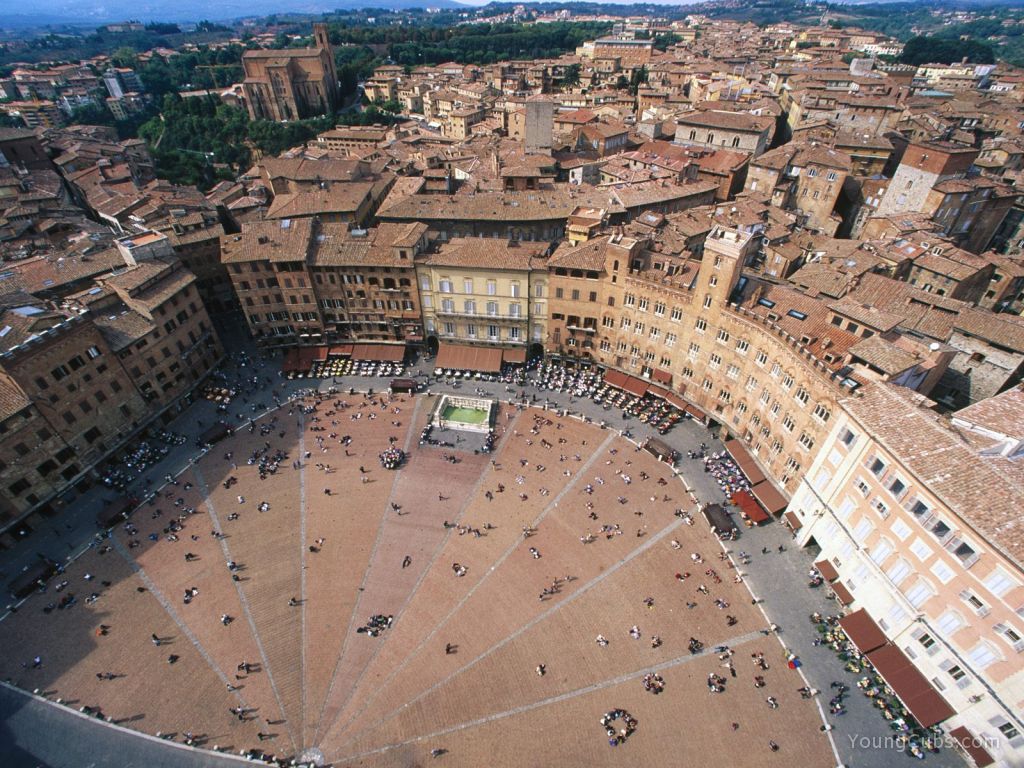
By using the strade bianche, RCS also embraced a course feature that’s native to the region the race traverses. They didn’t make the mistake of hunting down misfit scraps of cobbles to mimic Roubaix or venture out to some coastal capi to cash in on Milan-San Remo’s intellectual property. Like the rest of the Chianti region it passes through, the race recognizes the value of terroir and embraced the local flavors that the hills and roads of the region have to offer. Those flavors add an air of authenticity and timelessness to the race despite its youth, and having the finish in Siena's iconic Piazza del Campo, site of the Palio horse race, doesn't exactly hurt, either.
RCS also had enough confidence in their concept to let it stand on its own merit. Granted, I haven’t reviewed all the literature, but I’ve never seen them promote it as “Italy’s Paris-Roubaix” or “just as tough as Roubaix.” When you’re promoting a new race with bits of questionable roadway divided into sectors, it can be tough to avoid those words parting your lips, but RCS is experienced enough to know that those sorts of phrases just immediately admit (and advertise) inferiority and lack of confidence in your race. Of course, as the organizer of the Giro d’ Italia, Tirreno-Adriatico, Milan-San Remo, and the Giro d’ Lombardia among others, RCS probably isn’t lacking for confidence in their ability to put on a good race. But you have to believe that there might be just a bit of a chip on their shoulder when they know their events will be compared to ASO properties like Roubaix, Fleche Wallone, and Liege. Fortunately, they feel good enough about their efforts at the Montepaschi to avoid making overambitious comparisons. It's OK to reference Roubaix or Flanders for your rough-road ride with friends, but for a professional race with serious ambitions, it's a no-no (Hel van het Mergelland, I'm looking at you).
Finally, RCS scored the perfect calendar spot for the Montepaschi, slotting it in a week after classics riders really get their heads in the game at Het Niewsblad and Kuurne and a week before they tune up for Milan-San Remo by riding Tirreno-Adriatico. The Montepaschi does face some competition from the simultaneous Dreidaagse van West-Vlaanderen in Belgium – which could siphon off some of the considerable home classics talent from that country – but at this time of the year, many riders will still be eyeing opportunities to head south. The Vuelta a Murcia also overlaps, but that’s far more relevant to the stage race crew. So, like Het Nieuwsblad, while the Montepaschi might not be a primary season target for many riders, organizers will still get a motivated group of relevant riders on rising form to attend. Perhaps most importantly from a calendar perspective, RCS didn’t overreach by trying to insert itself in the heart of classics season – like between San Remo and the rescheduled Gent-Wevelgem, or just after Liege. Though it might look like a more prestigious spot to the naked eye, trying to gatecrash a late March or April time slot would likely backfire as top riders pick and choose their targets.
Besides all that, I suppose the fact that RCS also owns La Gazetta dello Sport doesn't do the race's publicity efforts any harm, either. Call it an unfair advantage if you will, but some pretty good races have been founded to sell newspapers.
Broomwagon
- Pointing out above that a large number of Italian UCI 1.1 races are relatively anonymous wasn’t a slight. In fact, I highly recommend them – and their counterparts in France, Belgium, and the Netherlands. Look, if you’re going to plan a whole vacation around watching bike races, yes, by all means go for the gusto and hit the Gent-Ronde-Roubaix week, the Ardennes week, or the Giro d' Italia. But if you just happen to be banging around Europe on other business, check out the UCI calendar and see what’s going on where you are. Compared with the top races, the UCI 1.1 races are like seeing a great-but-lesser-known band at a small venue instead of a superstar at an arena. The music is still great, you can get a lot closer to the stage, and you’re far more likely to meet the guitarist having a drink at the bar.
- In writing about the Montepaschi race, how many times has “Strade Bianchi” been typed, only to be corrected to “Strade Bianche”? Or not corrected, as the case may be.
- Word just came down that first and second place at the U23 Cyclocross Worlds just rang the doping bell at that event. Two brothers, both from Poland. This news manages to go both ways on the stereotype meter, and both ways manage to be bad. On one hand, the news chips away at the somewhat baseless “cyclocross is cleaner” feeling as well as the timeworn “the new generation will be cleaner” mantra, but it also does a hell of a job reinforcing the “Eastern Europeans are all huge dopers” stereotype. Ah well.
- This is old news, but Gert Steegmans (RadioShack) got blown over in the Paris-Nice prologue and broke a collarbone. Blown over. Now, I know the weather over there hasn’t been peachy lately, and that time trial bikes are a bear in the crosswinds, but at 6 feet 2 inches and 185 pounds, Steegmans isn’t exactly a waif by bike racing standards. So if Steegmans was blown over, I’d expect Frank Schleck (Saxo Bank) to be somewhere in Oz, surrounded by Munchkins and oiling up a tin man right now. Ewww, that sounded bad. Anyway, more bad luck for Steegmans, which is a shame. I was looking forward to seeing how he’d do riding in a leadership role at the classics instead of playing second fiddle.
Labels: Business, Classics, international
Thursday, March 04, 2010
Branding Iron
As the native son of an affordably priced beach resort town, I appreciate the thought and craftsmanship that goes into a good screen-printed t-shirt. It starts with the basic graphic design elements like the colors and style of the design, which have to mesh with broader branding elements like an attractive, easily recognizable logo and a clever, catchy, and commercially desirable motto or catch phrase. Laid over (or underneath) all of that, there are the considerations of shirt colors, fabric weights, cuts, and quality. Between the art itself and the cotton canvas that hosts it, there’s plenty to appreciate for a true enthusiast of the medium. So, you could imagine my delight at the variety and volume of stunning shirt-craft on offer at the Shimano North American Handbuilt Bicycle Show, where seemingly every booth had something delightful in ink and cotton for sale. But this was no ordinary t-shirt show – there were some bicycles scattered about, too.
I'm kidding, of course. Fantastic handbuilt bikes were obviously and overwhelmingly the centerpiece of NAHBS, and if you’re interested in that sort of thing, you’ve probably already combed through a dizzying number of web sites and Flickr galleries to get your fix. But there were a hell of a lot of shirts on offer, too, and a good number of socks and hats as well. And though it might have created confusion as to what the real product was at times, the swift soft goods trade made sense for several reasons.
First, compared to selling the merits of marginally different $1,200+ custom frames, moving $20 t-shirts is easy money, and they pretty much sell themselves. Hang one up or throw a stack on the table, and if people like it enough, they’ll buy it. You’d don’t have to take the time to explain why your just-so seatstay treatment is better, or why getting just the right axle-to-crown length is crucial to executing your creative vision. It’s a t-shirt. People get it. And if you have a good design and sell enough of them, you can help mitigate the cost of getting to the show, at least.
Second, every good luxury brand – and most of the exhibitors at NAHBS could be considered luxury brands in cycling – knows that while most people can’t afford a $2,500 purse, they can afford a $40 t-shirt bearing the logo of a brand whose goods they admire. Most shirts at the show seemed to slot in at around $20, but the aspirational aspects of the marketing are the same.
Finally, if you have a reasonably attractive t-shirt design, people will actually pay you for a chance to advertise your brand. What could be better if you’re a small company looking to raise your profile? This concept is already well-trodden ground in cycling, though, so I won’t go any farther than that. (Except to point out that just because I’m noting that t-shirts give companies cheaper-than-free advertising doesn’t mean I’m one of those people who hangs around cycling message boards harrumphing about how I stripped all the logos from my frame and ride in a plain blue jersey because those bastards don’t pay me to advertise their stuff dontchaknowit. Who has the time?)
The Bicycle Trend Report
But enough about t-shirts -- you're probably wondering what was notable about the show for non-shirt enthusiasts. I’d say it was the move away from the over-the-top commuter/utility bikes of the past few years, and back towards what I’ll call sport bikes. By sport bikes, I mean road bikes designed for lively riding, but which will accommodate a greater range of fitness and flexibility levels than racing bikes, accept a 28c tire, fenders, and maybe a rack, and hopefully handle a bit of abuse without complaint. If you’re over 40, you probably call them sport-tourers, and if you’re over 40 and particularly crotchety you’ll probably rattle on about how Nishiki used to build a perfectly fine one and it didn’t cost two grand.
Given the emphasis on that genre, it was also refreshing to see that the interpretations of sport bikes were not radical, stylized overreactions to the exaggerated deficiencies people like to broadly assign to racing bikes. By and large, they didn’t have 700x98c tires to “smooth out rough roads”, or disc brakes, or handlebars so high that they would gently nuzzle your bearded chin, or self-consciously retro builds. They were just very nice bikes for people to take their normal rides on, without trying to oversell the buyer on some underlying, all-encompassing riding philosophy. And that’s progress, people. (So what's the next step on the road to universal cycling enlightenment? People who should and do know better will stop crowing about how racing bikes are uncomfortable in their marketing materials. Horses for courses, and for people who race, who ride long and fast, and who are used to them, racing bikes are shockingly comfortable.)
Anyway, from a market perspective, the move to sport bikes from uber-commuters makes sense. Almost too much sense for the bike industry. I’d venture there are far more people looking for a fine, pricey, handbuilt bicycle for recreation -- something comfortable and fun to ride with friends or on a Backroads tour of the Sonoma wine country -- than there are people looking for a fine, pricey, handbuilt bicycle to ride to the Safeway for deodorant and cheese and then lock to the parking meter outside the office. And since they’re already fighting for a tiny segment of overall bicycle consumption, builders are well served in providing what the greatest number of consumers want to buy, not what builders wish they wanted to buy. In the interest of full disclosure, I don’t have statistics to back any of that last part up.
The whole commuter-centric feel that pervaded the past few years’ shows gave off a bit of a racing-is-passé vibe, at least for someone reading the coverage from a distance. But while it would be foolish for NAHBS-type builders to focus heavily on a racing market dominated by big production, big marketing, and high margins, there was still a lot for someone involved in competitive cycling to like at the show. For instance, two of the last great European shadow-builders were present – Dario Pegorretti and Cyfac. Together, those two outfits account for quite a few high-profile professional racing results – it’s just that their frames were buried under someone else’s name at the time. With uniquely sculpted and easily identifiable (read: branded) carbon now the universal norm at the professional level, it’s tougher to pull off a good rebadging, so both companies have had to build their own brands in recent years, both to considerable success.
Further highlighting the changes in how bike builders and pro cycling teams interact was Italian builder Tiziano Zullo, based in Castelnuovo del Garda. Under its own name, Zullo sponsored the powerful Dutch TVM squad in the early 1990s, netting the final stage of the 1991 Tour de France under Dmitri Konyshev for the brand. Zullo’s production? About 200 frames per year. Compare that with the financial and production capacity needed to sponsor a top team today, and you see why there’s less diversity on the downtubes of the pro peloton these days.
The Cultural Trend Report
The success of the NAHBS over the past several years fits with what I see as a trend that goes beyond cycling. In a nation that traded its ability to manufacture much of anything for cheap product and the vaunted service economy (which is, in turn, being outsourced), there had been growing acceptance that material goods are things that are made by machines somewhere overseas, not by people here with ideas and families and houses. But in response to that alienation from the goods we consume, there now seems to be a growing fascination with people who can actually MAKE things – quality things – using knowledge, skill, and their own two hands. You can see it at NAHBS, of course, where I ran into people who already had bikes on order with builders, but who made the trip down just to meet the person making their bike face-to-face. But maybe more importantly for culture at large, you can see returned interest in production and origin in more moneyed industries than cycling. On television, there are any number of cable shows highlight the work of carpenters doing home remodels; show how, where, and by whom consumer items are made; and espouse the benefits of cooking real food. Grocery stores that note where, how, and by whom the food you’re buying was produced are doing better than ever, despite their higher prices. Foreign car manufacturers trumpet the fact that many of their cars are actually made in the United States by American workers. In short, people are starting to care again about where things came from and how they’re made, and that’s important. Beats not giving a damn, anyway.
Broomwagon
- Did I really just refer to it as the Shimano North American Handbuilt Bicycle Show up there? Yes, I did. Sponsors keep cycling’s collective show on the air, so when it’s reasonable, I try to keep their names associated with the events and teams they’re bankrolling. When is it not reasonable? When people name their team something like “ShipCrap International Logistics Company Professional Cycling Team presented by Stinky Puppy Coffee Company – Put Some Pup in Your Cup.” In print, that sort of branding diarrhea eats up your word count. Online, it just annoys me.
- Sports – particularly the vaguely defined category of “outdoor sports” like cycling, running, surfing, and skateboarding – have always been a t-shirt rich environment. We’ve been over brand shirts already, but then you’ve got your participant shirts, your souvenir shirts, your one-off novelty shirts, your cause shirts, your tribute shirts, you name it. For godssake, you’d think cyclists didn’t know how to use buttons.
- Several of the display booth designs at NAHBS really stood out. Vanilla’s booth, with a series of large crates depicting phases of frame production and others housing bike-display dioramas, was well done down to the last detail, as was Bilenky's full-scale reproduction of its workshop. I also liked Rapha’s mini-mart themed booth, since it reminded me of a travelling companion from my junior days who used long drives to expound at length on the virtues of well-stocked marts and their undeniable value to cyclists.
- The big-time booths were nice, but one of the most intriguing areas of the show was the back right corner, where the ultra-small builders had their space. One man, one bike, and a folding table. It doesn’t get more grassroots than that.
- No, I didn’t buy any t-shirts.
Labels: Business, industry, Rambling, Tech
Thursday, February 25, 2010
Lost in Translation
Word was said to be leaking out of Italy over the past several days that Washington, DC, had indeed landed its longshot bid to host the start of the 2012 Giro d’ Italia. Big cycling media reports, subsequently parroted and embellished in any number of places, said that organizer RCS had made statements to the Italian press indicating it was a done deal, with the announcement to be made this morning at the Italian Embassy in DC.
Now, in the fading light of Thursday afternoon, those reports appear to be not quite so accurate, and I’m not talking about the fact that the event is going to be this evening rather than this morning. An event there will be, it seems, but rather than a triumphant victory announcement, it will be a rah-rah session held by the Italians and the Mayor in an effort to convince area businesses (and likely the rest of the DC government) that a wildly misplaced Italian bicycle race will be a financial benefit to the city. In other words, get them to cough up some dough.
That's a substantially different story from those running yesterday, though most of those stories have now been "updated", or "corrected," or "retracted," depending on how you look at it.
I have to admit, when the idea of DC hosting the Giro initially floated out, I approached it with a feeling of acute skepticism, bordering on pessimism. And frankly, even though DC’s proverbial hat seems to still be in the ring, I’m still finding it hard to shake those feelings. I support the effort – this would, after all, bring the Giro d'Italia to my backyard, or five miles from it, anyway. And it's bold, risky, and a little bit ill-advised, and I like that. But hauling a grand tour across the Atlantic is a gargantuan undertaking, fraught with a number of logistical challenges that can’t be overcome with mere enthusiasm. Some can't even be overcome with money, and that's saying something. Among the challenges, monetary and otherwise, that will have to be faced down:
- For the past several years, the Giro has faced substantial criticism from riders about the length of the transfers between stages – and that’s when we were talking about a three-hour bus ride. Imagine the reactions to 14 hours in the air. I expect the riders’ association to weigh in.
- Beyond the travel time, riders will be fairly resistant to sitting in a flying, germ-recirculating aluminum tube just as they're hitting some of their lowest body fat levels of the year. Twice.
- Jetlag. Going east is worse, so expect a less-than-enthusiastic Stage 2 back in Italia.
- During the U.S. phase of the race, there would be a six-hour time difference between the Giro's primary viewing audience in Europe and the bike race itself. Organizers would likely mitigate that problem with early starts in local time, which in turn will piss off riders, soigneurs, and mechanics.
- Since DC would host at least a prologue and likely at least one additional stage, the cost and hassle of having to ship both a time trial bike (prologue) and a road bike (stage 1) and related equipment for each rider will have to be considered. Bike sponsors will not want to lose the time trial bike exposure of a grand tour prologue to the quaint "Eddy Merckx style" prologue rules often used for races in exotic (read: non-European) locations. This isn’t the Herald Sun Tour or Qatar. It’s the Giro.
- The price for a second set of infrastructure required will be substantial on its own. Things like a complete set of rental cars for teams, organizers, officials, etc. And box trucks. And vans. And campers. And motorcycles. (Plus insurance.) And banners. And barriers. And radios. And 42 sets of roof racks.
- By going transatlantic, the race would substantially increase the cost and hassle for the media and other assorted camp followers. If these outlets are forced to cut costs, coverage (and associated sponsor exposure) could suffer.
- By exiting the bounds of the European Union, race organization and teams may spend more time than they'd like dealing with visa issues.
- I would expect that RCS will likely incur some financial loss from the reduced value of a Giro sponsorship to Italian/European sponsors, who would receive lower exposure in their key markets for two or more days of the race, including the presentation and grand depart. Organizers would need to be able to make that up with cash from this side of the ocean, which is hard to come by these days.
- RCS would also likely experience sponsorship value loss (and subsequent income loss) from European sponsors paying to drive a giant, rotating fiberglass sausage or something in the publicity caravan. Assuming nobody intends to fly that circus here and back, those sponsors would see about 1/10 of their days on the road eliminated. Granted, this could theoretically be mitigated by creating a second, U.S. caravan, though the concept is a little more alien here, and that could present sponsors with a pretty hefty sunk cost for 2 or 3 days of use.
- I haven’t been able to confirm, but there were apparently issues with the National ParkService prohibition on advertising when the Tour du Pont went through Rock Creek Park awhile back, which could mean either not using the most obvious road in the city to use, or taking another hit to sponsor value by driving unlabeled vehicles on un-bannered roads, etc., for one of two days here. Again, unconfirmed, and I don't remember.
- In trying to compensate for lost sponsor money on the Italian side with funds from U.S. backers, organizers may face potential sponsorship competition with the re-scheduled Tour of California, if it's still around in 2012. That is, potential U.S. non-endemic sponsors big enough to cut the big checks for cycling will likely have to decide whether to support the "U.S. race" or the "Italian race", both of which would be in the United States at the same time. If those potential sponsors are after warm feelings in the United States via cycling sponsorship, ToC is probably a better choice. If they're after warm feelings in Italy/Europe via cycling sponsorship, they're probably better off supporting an Italian/European race that's actually in Italy/Europe.
- Outside of the race organizational aspects, I also suspect there will be quite a local outcry if the Mayor and City Council pony up any city money (such as police costs or road surface improvement) for some Italian bicycle race instead of paying school teachers, increasing police on the streets, feeding the poor, or addressing any of DC’s other myriad issues. And DC's usual sugardaddy, the Fed, is getting pretty strapped these days. Yes, most if not all of those costs could be recouped via economic benefit to the city as a result of the race, but few outraged citizens will get that far in their analysis once the shouting starts. Look at what happened to the San Francisco Grand Prix.
So yes, I’m skeptical. But I’m also hopeful. The people working on the bid are experienced, smart people, and they know cycling and event planning. I’m sure I haven’t listed anything above that they haven’t thought of themselves. And if they needed help, I’d sign up in an instant. Hopefully, tonight’s session at the Embassy will be another step on the road to success, even if it’s not quite the finish line people were expecting yesterday.
Labels: Business, domestic, Giro d' Italia, international
Thursday, July 30, 2009
Hints and Allegations
Just wanted to do a quick follow-on to yesterday’s post, which wondered, based on admittedly slim evidence, whether or not Francisco Mancebo is planning a jump from Rock Racing to Caisse d’Epargne. Having not heard back yet from either team, we still don’t know for sure whether there’s any truth to the matter or not (though the folks from Rock & Republic did pay the site a visit before ignoring the request). What we do know as of this morning is that Caisse d’ Epargne doesn’t plan to start him in the Clasica San Sebastian either way – they’ve released their roster this morning. Mancebo has also been removed from the start list at cyclingnews.com as of mid-morning.
Still, doesn’t it seem strange that Mancebo’s name would appear on the start list of Eusebio Unzué’s squad entirely without rhyme or reason? Sure, there’s the fact that his full name is Francisco Mancebo Perez, and the team also boasts a Francisco Perez Sanchez, so I suppose that could cause confusion for someone quickly typing up a start list, especially for someone who has typed most riders' names dozens of times. The problem with that is that in the earlier cyclingnews.com version of the start list, both Mancebo Perez and Perez Sanchez were listed. (Perez remains listed in Caisse’s official roster of this morning.)
Also counting against the “innocent mistake” argument is the undeniably long and fruitful association between Mancebo and Unzué’s outfits. Mancebo turned professional in 2000 with Banesto, the team with which Unzué directed Miguel Indurain to five Tour de France and two Giro d’ Italia wins. Before that, the team was known as Reynolds, with which Pedro Delgado scored his Tour de France win. In that neo-pro season, Mancebo won the white jersey of the best young rider in the 2000 Tour de France, setting his countrymen to wondering whether he would be the next great Spanish GC hope. Mancebo didn’t turn out to be an overnight Tour candidate, but he followed up that neo-pro season with a number of quality wins, staying on with Unzué as the team morphed into iBanesto.com, Illes Balears-Banesto, and finally to Illes Balears-Caisse d’ Epargne. He also made steady progress in his GC placings, capping off his time with Unzué with a personal best 4th place in the 2005 Tour de France and a 3rd place in the Vuelta a Espana.
Following that performance, Mancebo finally left Unzué’s squad (which would become Caisse d’Epargne in 2006) for Ag2r, where he wouldn’t have to compete with an ascendant Alejandro Valverde for team leadership. Shortly after, Mancebo’s number came up in the Operacion Puerto scandal, and he was subsequently prevented from starting the 2006 Tour de France. He announced his retirement from cycling, but mounted a return the following year with the Spanish second-tier Relax-GAM before sliding to the anonymous Fercase-Paredes squad in 2008. In 2009, he signed with the often troubled U.S. Rock Racing squad, where he raced alongside other Puerto refugees Oscar Sevilla and Tyler Hamilton. He’s achieved some reasonable results in that time, including making an impression in several Spanish appearances, but Rock Racing’s continental license doesn’t allow him to compete in the biggest events.
Now, reviewing that history, does it seem like a coincidence that Mancebo’s name would pop up under the Caisse d’ Epargne name? And, does it seem that far fetched to think that, given half a chance, Mancebo wouldn’t get on a flight tomorrow to go back home and ride for a ProTour team and the director who guided him to his biggest successes? The real question lies in what such a move would solve for Unzué.
Unzué’s current leader, Valverde, is already barred from racing in Italy due to his own connections to Operacion Puerto and is now facing the very real prospect of that ban being made international. So Unzué could try to hedge his bets by bringing in an experienced and familiar GC rider. However, should he return to European racing and regain some prominence, Mancebo’s alleged involvement in Operacion Puerto could land him in much the same boat as Valverde, though most non-Italians have seen fit to move on from Puerto at this point. Additionally, if Valverde is benched, Unzué already has some other viable options for getting big results in Joachim Rodriguez and Luis Leon Sanchez, both of whom are younger than Mancebo and haven’t been several years removed from top-flight racing. So as a Valverde-substitute, Mancebo doesn’t make the most sense at this point.
The other reason for bringing back Mancebo could relate to this week’s biggest rumor mill, namely the question over where Alberto Contador (Astana) may ride next year. Should Contador jump ship, he’ll want assurances of a team that can back him up, and Mancebo could add some value to Caisse as a potential support rider in the grand tours.
Taking all that into account, it looks as if, in the event that Mancebo does land back under Unzué’s wing, the reason is likely to be more personal than sporting. Regardless of the reasoning though, Mancebo still seems to have what it takes to hold his own in Europe, and could produce a few more profitable seasons under proven leadership.
[Note: If you've read this far, please do read the followup here.]
Labels: Business, Riders, Speculation
Monday, June 29, 2009
Believe in Hype
In his article covering the U.S. national soccer team’s unlikely win over the superpower Spanish side in the Confederation Cup, the New York Times’ George Vecsey addressed the details of that match, but also used it as a jumping-off point to discuss the state of U.S. soccer. In recounting the team’s journey to the win, Vecsey noted that the U.S. coach “was under attack in blogs in recent weeks. (Yapping about the coach is a great step forward for the United States.)”
Vecsey was talking about soccer in the U.S., of course, not cycling, but his seemingly innocuous little parenthetical hits at a much larger point that U.S. cycling fans might be advised to bear in mind. Over the past week or so, with the Tour de France looming on the horizon, there’s been an increasing amount of backlash to the saturation coverage of Astana’s internecine drama, Tom Boonen’s recreational pursuits, various court cases, and the UCI’s hamfisted approach to governance. “Enough!” the critics shout, “let’s talk about the sport, about the racing, about who‘s fast and who‘s not.” Sometimes, in my weaker and more purist moments, I find myself leaning the same way. After all, who’s not just a little tired of all dope, all the time, or, alternatively, all Armstrong all the time? But then I snap to my senses and remember that all that coverage of the various, seemingly peripheral issues of professional cycling, miscellaneous hero worship, scandals, and gratuitous pot-stirring included, is, as Vecsey put it, “a great step forward.”
Simply put, the fact that so much non-competition coverage of cycling is being produced, consumed, and discussed by the U.S. audience means that, to a certain extent, the sport has taken hold here. It means that the U.S. audience is no longer content to simply be told what happened out on the road, spoon fed who won or lost, how, and by how many seconds, all set to an insipid John Tesh soundtrack. They’ve long since learned the basics, and now, they want to know more about the personalities, about the business, and about the behind-the-scenes maneuvering. Why? Because it helps inform what they see when they watch the races or when they read the race coverage. And, maybe more importantly, it’s all that non-competition coverage that helps fuel, if not barroom banter, then at least post-ride coffee shop kvetching -- that “yapping about the coach” that shows that fans are involved and emotionally invested. And it’s that investment that makes professional sports appealing to sponsors, and, therefore, commercially viable.
If you look at what’s written about the two most successful “world sports” -- soccer and Formula 1 racing -- you’ll find that much of what’s reported in the vaunted pages of L’Equipe and La Gazzetta dello Sport isn’t about the nuts and bolts of what happened on the field or track; it’s about the various incidents and intrigues surrounding the sports. Was AC Milan involved in fixing matches? Will Ferrari really drop sponsorship of their legendary racing team next season? How many million pounds was that latest transfer in the English Premiership worth? Who was Ronaldo spotted cavorting on a Bali beach with? None of that stuff is really about sport, per se -- it’s not about who won or lost, or who made a great pass on the pitch or on the track. It's chatter, and a lot of times, it's trivial, or speculative, or overblown, just like some of the cycling coverage people complain about. But then again, in that respect, cycling could find worse company to be in if it's looking to sustain itself in the current economy.
Besides, there's frankly only so much you can write about the competition itself (trust me), and though some cycling fans might tell themselves otherwise, there’s only so much of “just the racing” that the public can read. Now, I’m not arguing that we really need that fifth article about Armstrong’s new girlfriend, that every time one teammate calls another an asshole needs to be reported and dissected, or that every hangnail Cadel Evans gets warrants a fresh interview. All I’m saying is, if you find yourself getting irritated by whatever you want to call this sort of reporting -- be it fluff, media hype, or muckraking -- you can also take comfort in the fact that, underneath it all, it’s a good sign for the sport, not some sort of death knell. After all, very few sports have ever died due to bad, excessive, or frivolous media coverage. They die because the fans don’t care.
***********************
Pretty quick one today, eh? We're hoping to get out an interview in two parts over the course of this week before the Tour de France frenzy kicks in this weekend. Stay tuned.
Labels: Business, Media, Rambling
Wednesday, June 24, 2009
What Might Have Been
On Tuesday, Bicycling’s Joe Lindsey put out a great piece that uncovers several of the contingency plans that were set to go into action had the Astana team’s Kazakh backers failed to deliver the €6 million bank guarantee the UCI saddled them with. Drawing on sources from within and close to Astana, Lindsey reveals that the team was set to continue as Livestrong-Nike had the Kazakhs failed to pony up the cash, and that Alberto Contador had been in talks with Caisse d’ Epargne. Lindsey also outlines what all this dealing means to an Astana squad that will now continue with both Contador and Armstrong attached, mainly focusing on the Lemond-Hinault showdown scenario that many have been salivating over since Armstrong announced his return.
For me, though, none of those things are the headline of this story. Rather, it’s the news of the team that Contador was allegedly most serious about joining – Garmin-Slipstream. According to Astana sources cited in Lindsey’s story, negotiations had gone far enough that the squad was shipping Felt bikes to Contador and had brought on Herbalife to chip in an extra $2 million to cover Contador and an entourage including a soigneur, a mechanic, and Astana compadres Sergio Paulinho and Benjamin Noval. So why should those little facts trump all the other juicy info in the article? Because, if accurate (Garmin sources have yet to confirm), they reveal that things are getting desperate in the Garmin camp with just a week and a half left until the Tour de France.
It can be hard to see at times, but Vaughters and company do have reason to be nursing a fairly sweaty set of palms these days. Last year, when the team was a scrappy Pro Continental squad looking to earn some respect, Dan Martin’s hard fought third place in the Med Tour, Tyler Farrar’s Zeeland GC win and sprint win over Mark Cavendish (Columbia) at Tirreno-Adriatico, and David Millar’s top-10 at the Dauphine would have been good results. But this year, with Garmin out of the underdog slot and playing in the big leagues, things are looking a little thin in the win column, and fans don’t get nearly as enthused about near-misses from breakaways and top five finishes in time trials. Additionally, the team’s “clean team” hook has worn a bit thin, and the focus has shifted more from establishing that reputation to earning results – the team has said as much. Add in Tour GC hope Christian Vande Velde’s ill-timed injury at the Giro, David Millar’s shoulder injury, and Columbia-High Road’s Giro thumping of Garmin at its own TTT specialty, and the team’s Tour campaign – the one that could save the season – was leaning towards a letdown. Set against that backdrop, it’s not hard to see why Garmin was looking for options.
But signing a three-time grand tour winner and agreeing to take on a few of his buddies as well? Loading up a more-or-less Anglophone team with a good portion of Discovery Channel’s former Spanish Armada? For a squad that’s always carefully selected riders to ensure team cohesion and proper fit, resorting to those sort of last-minute mercenary dealings is a marked departure. Indeed, the deal seems to be a departure from many of the team’s basic principles, and may indicate a bit of a crisis of faith within the organization.
Since the team’s TIAA-Cref days, team manager Jonathan Vaughters has set out to develop young talent, and though he made some battle-proven signings to help the team build momentum last year, he’s basically stayed true to that methodology. Sure, David Millar, David Zabriskie, Magnus Backstedt, Julian Dean, and Christian Vande Velde had already been around the block a few times when Vaughters picked them up, but Vaughters hasn’t been one to pursue and sign whichever superstar came up on the auction block, and those signings were hardly flashy.
Rather, slow, steady growth has been the model, and Vaughters has relied on an ability to spot young talent and on patience, nurturing riders like Martin Maaskant, Farrar, and Martin as they make names for themselves wearing his jersey. And of course, last year’s Tour revealed Vande Velde as a reasonable GC contender – an emergence that, despite Vande Velde’s long experience, still felt like the discovery of a new rider, and one that Vaughters has justifiably been given credit for.
On an organizational level as well, Garmin has made a name for itself by running counter to many of the dusty traditions and folk remedies of European cycling, instead developing its own management concepts and the various “protocols” developed by team physiologist Allen Lim. Combined with the team’s doping stance and its patient approach to rider development, Garmin had positioned itself as a new kind of cycling team for what many fans are hoping is a new era in the sport.
But the potential Contador deal, if such a deal was indeed in the works, undermines all that in one fell swoop. Simply hiring a big gun and his stable mates, tossing aside internal development, team cohesion, and slow growth in favor of results here and now, is straight from the old days. It doesn’t matter that, in the end, the deal didn’t happen – knowing that it could have tells us what we need to know. I’d also wager that those riders who thought they were vying for a spot on Garmin’s Tour de France roster have learned a thing or two as well.
Joe Lindsey was dead on about what the dead-on-arrival Contador-Garmin deal could mean to cohesion within the shored-up Astana team, but its potential affects on Garmin could be even more disastrous.
Labels: Business, Teams, Tour de France
Thursday, June 18, 2009
Well, Yes and No
There are at least two sides to every story, and in cycling these days, there are always at least two answers to every question. Let’s look at four of this week’s discussion topics, and try to arrive at a simple “yes or no” based on the news of the week.
1. Is examining blood values a reliable way to catch cheaters?
Pat McQuaid and the UCI give an emphatic “yes,” based on the fact that, over the space of a week and a half, they got to nab the “list of five” for blood profile suspicions and Toni Colom (Katusha) for EPO. According to the UCI, Colom was targeted for the EPO test based on suspicious blood values, so we’re giving the UCI the benefit of the doubt and calling that a bio passport success as well. Of course, asking the UCI if blood values work is like asking a proud parent of an honor roll student if their child is really smart – they had a bit of a skewed view in the first place, and now they have the bumper sticker to prove it. Of course they’ll say yes.
In the “no” chorus we have Bernhard Kohl, whose story is, by now, over-told. But now Kohl has someone to harmonize with in newcomer Vladimir Gusev. Gusev was terminated last year by Astana for blood values that were interpreted as suspicious by well-known dope guy and Astana consultant Rasmus Damsgaard. CAS decided that maybe those values weren’t so suspicious after all, at least not suspicious enough for Astana to fire him over. In the meantime, Saxo Bank, where Bjarne Riis helped Damsgaard forge his dope-monitoring legend, has scaled back its vaunted internal testing programs citing the fact that the UCI passport program covers the same ground. So if the bio passport tests are now taking the place of some of the internal controls teams used to do, are they prone to the same problems? Only the appeals will tell, so call us in eight months or a year.
2. Does the UCI know what “targeted” means?
On June 9, the day they announced the Colom positive, the UCI seemed to have a solid grasp of what “targeted” meant. Colom’s blood values looked a little fishy, and so based on that, they gave him more tests than the average, non-suspicious rider. You know, they “targeted” him.
But that moment of clarity seems to be fading fast, as cyclingnews.com’s interview with UCI Reine de Dopage Anne Gripper reveals. Gripper comments on the list of 50 riders that the UCI has said will be extra-special tested in the run-up to the Tour de France (not to be confused with the list of five riders to be prosecuted). According to Gripper, these 50 riders aren’t being “targeted,” they’re just being subjected to additional testing based on the fact that they’re likely to do well at the Tour, either in terms of GC or stage wins. Well, that’s better – thank goodness they aren’t being targeted, you know, in the sense of being singled out for extra scrutiny based on a specific criteria or behavioral pattern. Like winning races or something.
It doesn’t really matter, of course, but I do hesitate to ask what they’ve thought “random” meant all these years.
3. Are Astana’s money problems solved?
Yes, apparently. Just a day or so after the UCI’s deadline officially passed, Bruyneel and the team’s Kazakh sponsors managed to come to some sort of agreement that should see everyone paid through the end of 2009.
But then we have to ask, who is everyone? Because if we go back to that Gusev story again, we see that Astana, presumably through Bruyneel’s Olympus management company, now owes the amply-chinned Russian his salary, plus damages, plus legal costs. I don’t know what his salary was, but Gusev was starting to really break through right before he got preemptively popped by the team, so damages could be considerable. So will Astana’s barely-dry check from Kazakhstan cover that little tab, or is Bruyneel going to be left to cough up the rubles himself? I don’t know, but if you think it’s hard to get the Kazakhs to pay guys who have ridden for them this year, you should see how hard it is to get them to pay the guys who haven’t.
4. Does Tom Boonen really like the marching powder as much as we think he does?
According to the testing agency and the Belgian justice system, yes. Boonen himself says he was blacked out during the night in question, and can’t rightly say either way whether he did cocaine or not. But now an independent review panel says no, Boonen didn’t actually ingest cocaine. Apparently, panel looked at a hair test, and while it does show the presence of cocaine, it doesn’t show enough coke present to indicate definitively that Boonen had any, only that he’s probably seen some in the last few months.
Before we get too excited, I’d note that the English version of the story says Boonen didn’t “ingest” cocaine. The initial Flemish versions I’ve seen say he didn’t “snort” cocaine. These are obviously two different meanings, as there are other ways to ingest besides snorting, and they affect how strongly the drug shows up in your system. While, say, eating cocaine is less efficient than sniffing it, it is still ingestion. This cyclingnews.com article sheds some light on the testing tolerances and whatnot, but frankly I’m just bored with the whole thing, and I steadfastly avoid dealing with anything measured in ng/mg.
ASO is apparently bored with the whole business too, since they’ve announced today that, for their purposes, Boonen snorted, otherwise ingested, or rolled around in the blow enough to exclude him from this year’s Tour de France. Now all we’re left to wonder about is whether the UCI will still try to come up with some “damaging the image of cycling” charge to hang him by. I suppose they could, as he’s still caused a hell of a PR fuss, but if you can get hanged in cycling for having been in proximity to drugs, there won’t be an empty gallows or a vacant tree branch in all of Europe pretty soon. (Update: No sanction for Boonen)
So for those of you keeping score, that’s a yes, a maybe, a no, and a “we’ll see” all on a single question that doesn’t have the slightest bit to do with racing a bicycle. Flattering times for the sport, indeed.
Labels: Business, Doping, Tour de France, UCI